· 5 min read · Jonathan Chrisnaldy
Waking the Sleeping Giant
Last fall, I had the honor of moderating a conversation with Pak Gita Wirjawan, former Minister of Trade of Indonesia, at Columbia University. Here is what the discussion taught me about Indonesia's future, and why I believe our generation holds the key.
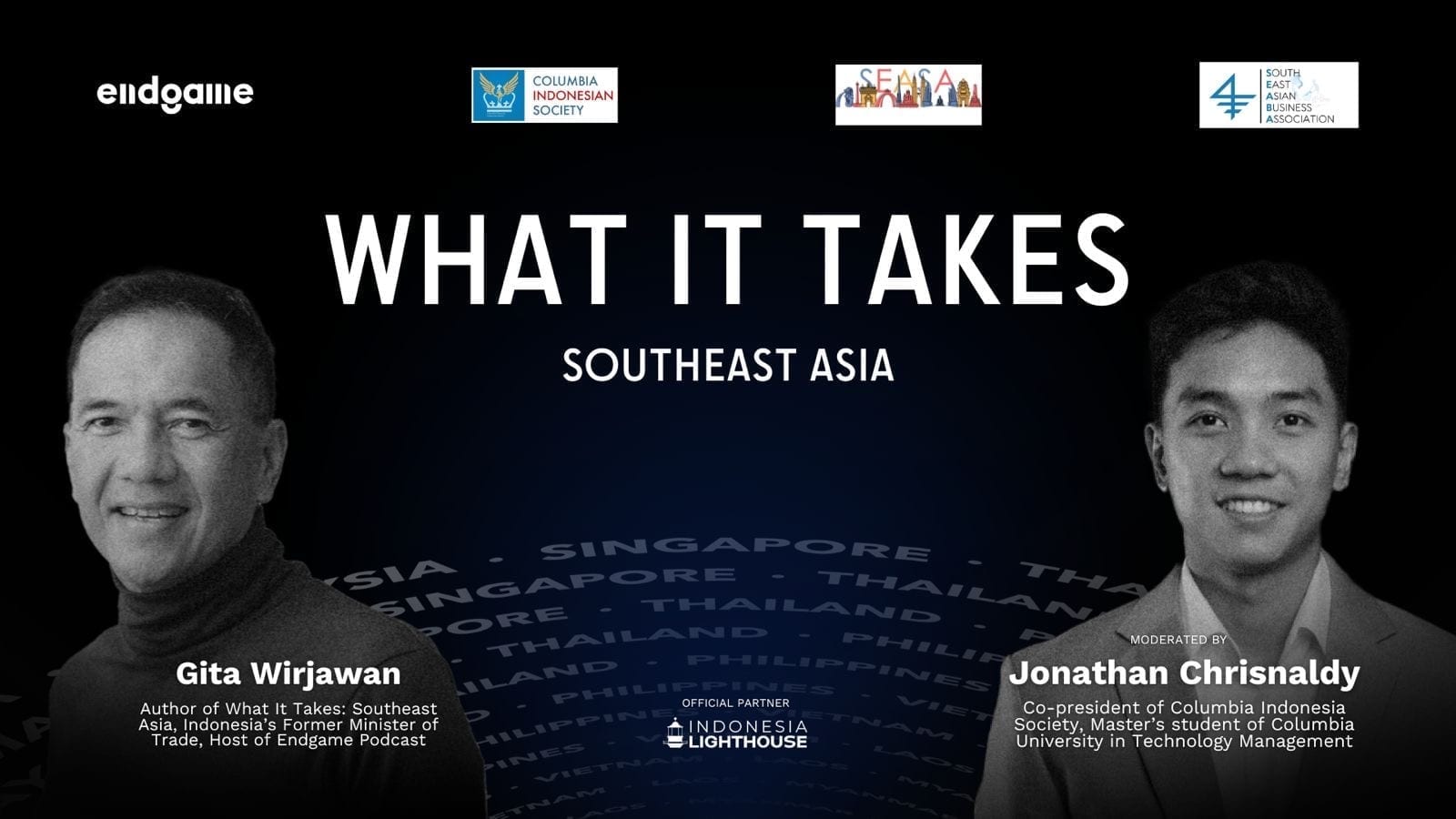
An evening with Pak Gita
The event was called “Endgame Live: What It Takes Southeast Asia,” hosted by the Columbia Indonesia Society (CIS). If you have ever watched Pak Gita’s podcast, Endgame, you know how he thinks. He asks big questions about education, technology, and sustainability, and he never settles for easy answers. His recent book, What It Takes, carries the same spirit. It asks how Southeast Asia can move from the edge of the world’s attention to the center of it.
Sitting on that stage as the moderator, I felt two things at once. Nervous, because guiding a conversation with someone of his depth is not a small task. And proud, because here was a room full of students at Columbia, many of them Indonesian, engaging directly with one of the sharpest minds our country has produced.
The theme of the night was simple to say but hard to do: how can Southeast Asia thrive in the middle of global uncertainty?
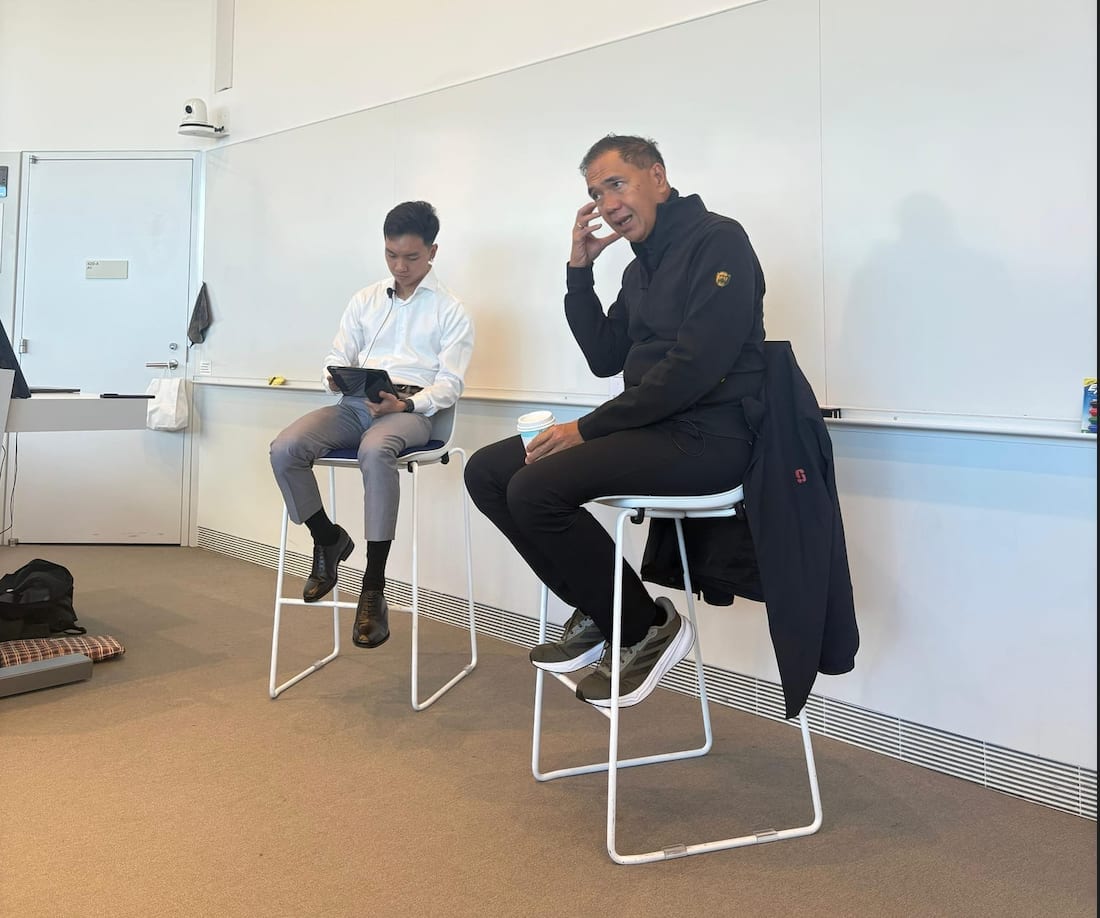
Three transformations
Throughout the conversation, one idea kept coming back to me. Indonesia’s journey from uncertainty to opportunity depends on three key transformations.
The first is mindset. Uncertainty is a fact of life. We cannot remove it, but we can change how we respond to it. Pak Gita’s point was that too often we simply manage uncertainty, reacting to whatever comes. The shift we need is to manage risk with confidence. That means making calculated bets, preparing for what might go wrong, and moving forward anyway. Countries that grow are not the ones that wait for certainty. They are the ones that act wisely without it.
The second is governance. Every country talks about good governance. Fewer countries practice it. The move Indonesia needs to make is from rhetoric to real, measurable accountability. It is not enough to announce a plan. Someone has to own it, track it, and answer for it. Trust is built when promises come with numbers, deadlines, and consequences.
The third is education and technology. For a long time, the conversation in Indonesia has been about quantity. More schools, more graduates, more devices. But quantity without quality is just noise. The real work is in better teachers, stronger institutions, and innovation that truly uplifts lives. A classroom with a great teacher will always beat a classroom with great gadgets and no one who knows how to use them.
The sleeping giant
My biggest takeaway from the night is this: Indonesia is a sleeping giant.
We are the fourth most populous country in the world. We are rich in talent, ideas, and optimism. Anyone who has spent time with young Indonesians, whether in Jakarta or in a lecture hall in New York, can feel the energy. The raw material for greatness is already there.
But potential is not the same as progress. A giant that stays asleep is just a large body taking up space.
The challenge for our generation is not to admire Indonesia’s potential. It is to awaken it. And waking a giant takes three things: courage, collaboration, and continuous learning.
Courage, because the safe path is always to wait for someone else to go first. Collaboration, because no single person, company, or ministry can transform a country of 280 million people alone. And continuous learning, because the world is changing faster than any curriculum can keep up. The moment we stop learning is the moment the giant goes back to sleep.
What this means for us
I left that evening with a question I keep asking myself: what is my part in this?
For those of us studying or working abroad, it is tempting to see Indonesia’s challenges from a distance, as something to analyze rather than something to act on. But distance can also be an advantage. We get to see how other systems work, learn from them, and bring those lessons home. The knowledge we gather here is only valuable if it eventually serves people back there.
That is also why communities like CIS matter. They keep us connected to home while we are away. They remind us that being far from Indonesia does not mean being absent from its future.
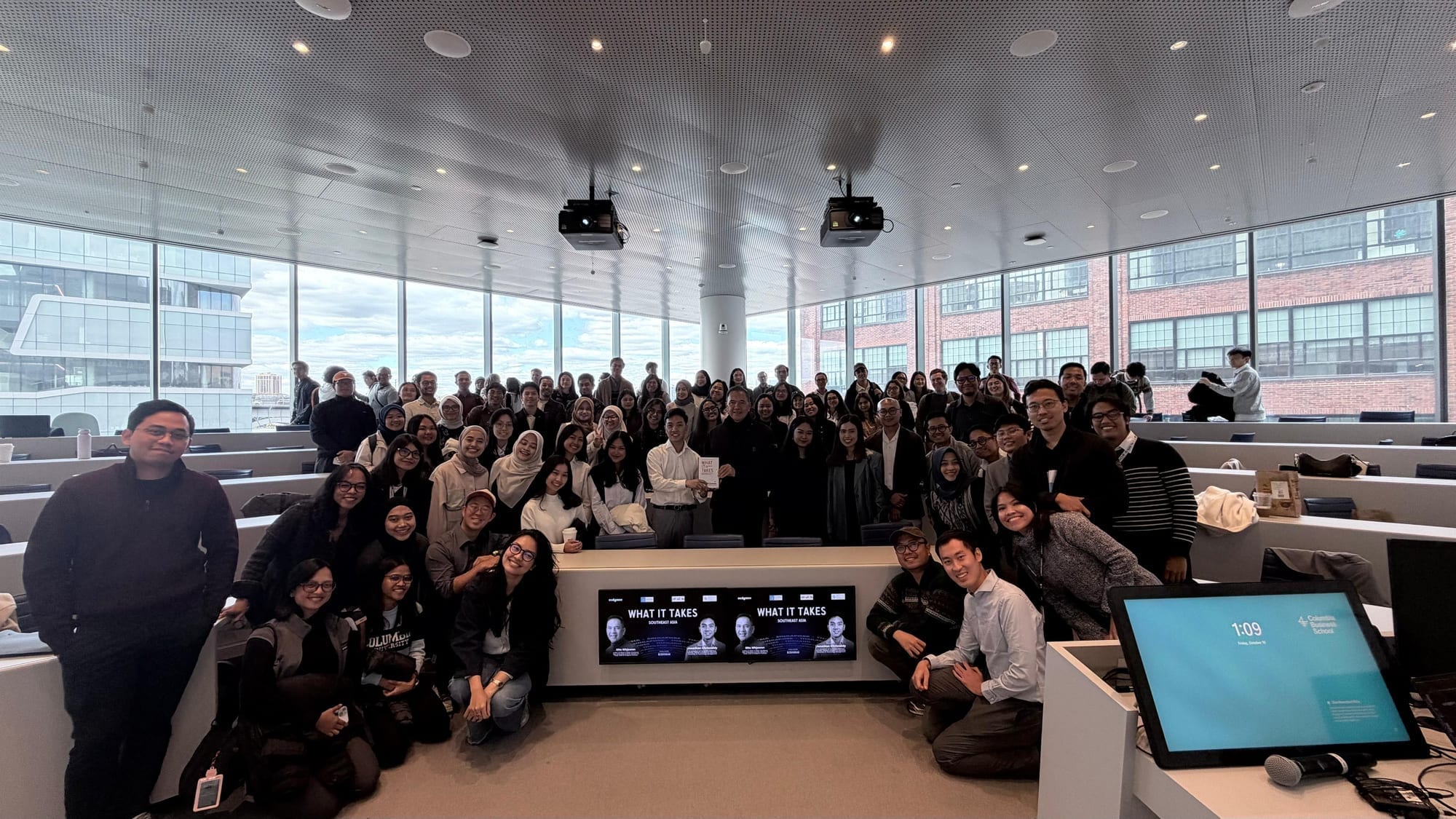
Pak Gita often says that nation building is a long game. There are no shortcuts, and the results may only show up decades from now. But that is exactly why it has to start with us, now. Mindset, governance, education. None of these transform overnight. They transform one decision, one classroom, and one honest institution at a time.
The giant is still sleeping. But it is our alarm clock to ring.
So keep learning, everyone.
— Jonathan
// About the author
Jonathan Chrisnaldy is a product manager and analyst in New York City, with an M.S. in Technology Management from Columbia University. He writes data stories about the numbers behind everyday claims. More on the experience page or LinkedIn.